
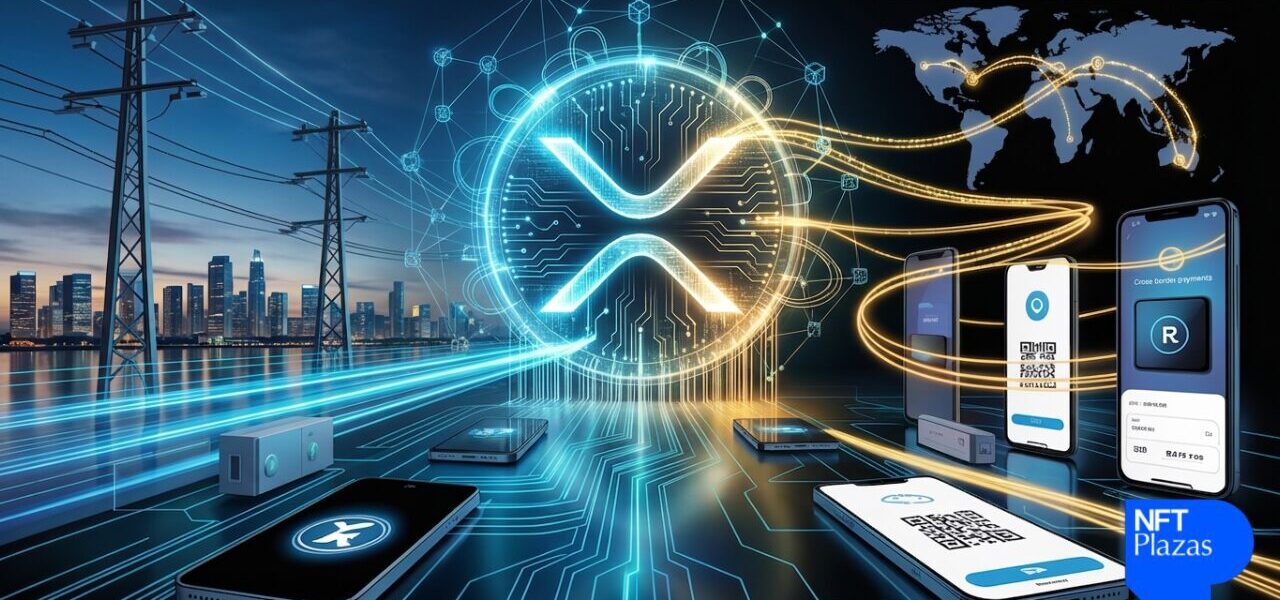
The XRP Ledger is rapidly expanding beyond its reputation as a fast, low-cost payments network. In a major step toward real-world utility, the blockchain now hosts $861 million worth of tokenized electricity, marking one of the most tangible use cases of real-world asset (RWA) tokenization to date.
This development doesn’t just represent growth – it signals a structural shift in how physical commodities like energy can be tracked, traded, and settled using blockchain infrastructure.
Turning Electricity Into a Digital Asset
At the center of this innovation is a token called JMWH, a digital asset that represents real electricity on-chain. Each JMWH token corresponds to one megawatt-hour (MWh) of energy, directly tied to actual production capacity from energy providers.
Unlike many tokenization experiments that remain conceptual, this system is already live and functioning. Energy contracts are converted into blockchain-based tokens, allowing electricity to be tracked from production to consumption with full transparency.
Once electricity is used, the corresponding tokens are burned, permanently removing them from circulation. This mechanism ensures that each token reflects real consumption, creating a verifiable link between digital records and physical energy usage.
The result is a system where:
- Supply is transparently recorded
- Consumption is verifiable in real time
- Settlement is automated and trustless
This level of clarity is unprecedented in traditional energy markets, which are often fragmented and opaque.

XRP Ledger powers $861M tokenized electricity
$861 Million in Live Value And Growing
According to available data, the tokenized electricity market on XRPL has already reached $861 million in live value, backed by energy providers operating in Latin America.
This is not speculative liquidity – it represents real infrastructure and production capacity. Each token is backed by actual energy output, giving the system intrinsic value tied to a critical global resource.
Adoption metrics further reinforce the momentum:
- Over 213,000 holders participating in the ecosystem
- Monthly transfer volume reaching $8.29 billion
- Continuous on-chain activity tied to real-world usage
These figures highlight a key turning point: blockchain is no longer limited to financial assets – it is now actively managing physical commodities at scale.
How the System Works
The process behind tokenized electricity on XRPL is both elegant and efficient:
- Energy contracts are created between producers and buyers
- These contracts are tokenized into JMWH units on the XRP Ledger
- Tokens are distributed to clients based on agreed allocations
- As electricity is consumed, tokens are burned to confirm usage
Every step is recorded on-chain, creating an immutable audit trail from issuance to consumption.
This approach eliminates discrepancies, reduces administrative overhead, and introduces a level of accountability that traditional systems struggle to achieve.

JMWH on XRP Ledger
Institutional Backing Adds Credibility
A key driver behind this initiative is institutional participation. In Argentina, state-backed energy firm YPF Luz has built its Enertoken platform on XRPL, leveraging blockchain to modernize energy distribution and tracking.
The platform operates through Justoken and complies with regulations under Argentina’s capital markets authority, adding a crucial layer of legitimacy.
This regulatory alignment is critical. It demonstrates that blockchain can integrate seamlessly into existing legal and financial frameworks – something that has historically been a barrier to adoption.
With institutional players involved, XRPL is no longer just a crypto-native ecosystem. It is becoming a trusted infrastructure layer for regulated industries.
Bitget Wallet Elevates XRPL to Core Payment Infrastructure
While tokenized electricity showcases XRPL’s expansion into commodities, its integration with Bitget Wallet highlights its transformation in payments.
Rather than a simple integration, Bitget Wallet is embedding XRPL directly into its infrastructure—positioning it as a primary rail for real-world crypto transactions.
This is a strategic shift. XRPL is no longer just one of many supported chains; it is becoming the backbone of how value moves the wallet ecosystem.
The timing is critical. Payments now account for roughly 53% of activity on XRPL, signaling a clear transition from trading-driven usage to real-world financial applications.
At the center of this payment evolution is RLUSD, now the network’s most transacted asset. Its rise reflects growing demand for:
- Stable value storage
- Low-cost transactions
- Instant cross-border transfers
With Bitget Wallet integration, users gain:
- Instant mainnet transfers for XRP and RLUSD
- Seamless cross-chain swaps
- A frictionless user experience without intermediaries
This effectively turns XRPL into a bridge between fragmented blockchain ecosystems.

Bitget Wallet names XRP Ledger as key payments partner.
Why This Matters: A New Era for Energy Markets
The tokenization of electricity represents more than technological progress – it introduces a fundamentally new way to manage and trade energy.
Traditional energy systems often suffer from:
- Delayed settlement processes
- Limited transparency
- Complex intermediaries
- Inefficient cross-border transactions
By moving energy contracts onto the blockchain, XRPL enables:
- Real-time settlement without intermediaries
- Transparent tracking of production and consumption
- Programmable contracts for automated execution
- Global accessibility for energy markets
This could reshape how energy is priced, distributed, and financed, particularly in emerging markets where infrastructure gaps remain significant.
XRPL’s Expanding Role in Real-World Assets
The success of tokenized electricity highlights a broader trend: the XRP Ledger is increasingly being used as a platform for real-world asset tokenization.
Beyond energy, XRPL is well-positioned to support:
- Commodities (oil, metals, agricultural goods)
- Financial instruments (bonds, invoices, derivatives)
- Carbon credits and sustainability assets
Its advantages, low fees, fast settlement, and scalability, make it particularly suitable for high-volume, real-world applications.
As more industries explore tokenization, XRPL is emerging as a preferred blockchain for deployments that require both efficiency and reliability.
Challenges and Market Realities
Despite these advancements, challenges remain. Market sentiment around XRP itself has been mixed, with price action reflecting broader macro pressures and investor caution.
This disconnect between strong fundamentals and weak price performance is not uncommon in early-stage technological shifts. Infrastructure often develops ahead of market recognition.
Additionally, scaling tokenized energy globally will require:
- Broader regulatory harmonization
- Standardization of tokenized assets
- Continued institutional participation
However, the current progress suggests these hurdles are being actively addressed.
Conclusion
The XRP Ledger’s role in powering $861 million in tokenized electricity marks a defining moment for blockchain adoption.
This is no longer about theoretical use cases or pilot programs. It is about live systems managing real resources, backed by institutions and operating within regulatory frameworks.
By bridging the gap between digital infrastructure and physical assets, XRPL is helping to redefine what blockchain can achieve.
If this trajectory continues, tokenized electricity may be just the beginning – opening the door to a future where global industries run on transparent, efficient, and decentralized rails powered by blockchain.