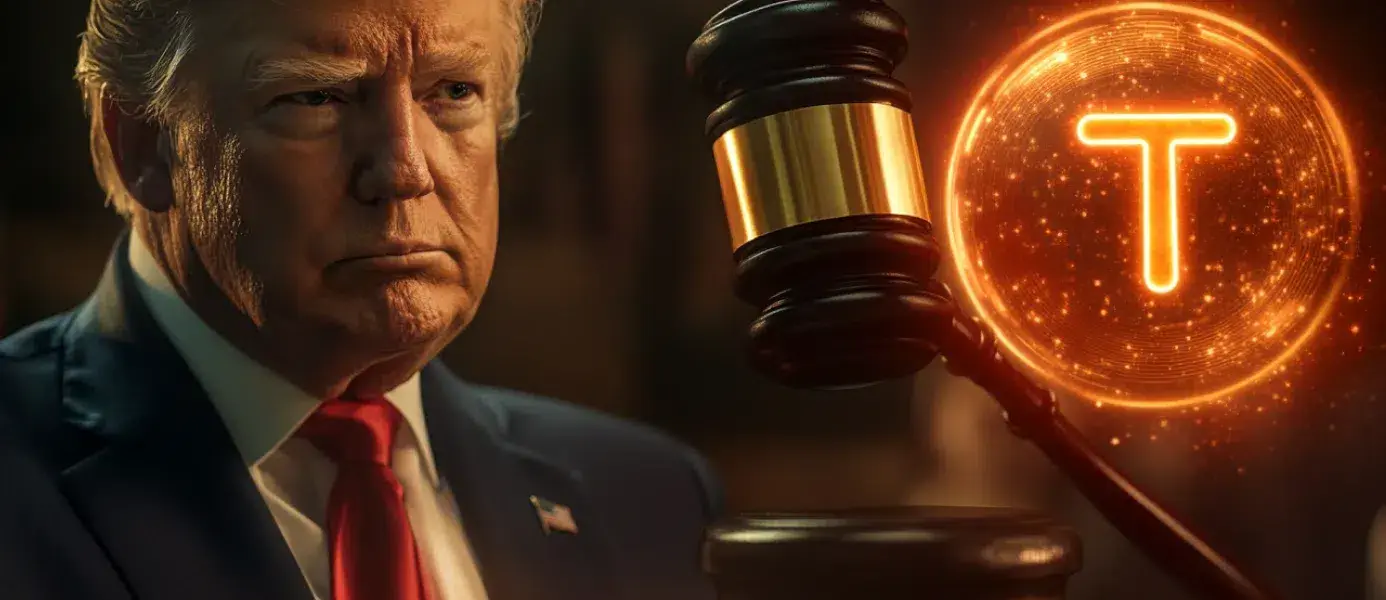
A White House teleprompter operator accused of using advance access to President Donald Trump’s speeches to profit from Kalshi prediction market bets has left the federal government while a regulatory investigation into the trades continues.
Summary
- The White House says Gabriel Perez no longer works for the federal government as the Kalshi betting investigation continues.
- Perez allegedly earned more than $100,000 by trading on Trump’s speeches using advance access to prepared remarks.
- Kalshi flagged the trades, froze most of the reported profits and referred the case to the CFTC.
According to the Associated Press, citing a White House official who spoke on condition of anonymity because they were not authorized to discuss personnel matters publicly, Gabriel Perez “no longer works in the federal government.” The official declined to say whether Perez resigned or was dismissed.
Earlier this month, the White House confirmed Perez had been placed on administrative leave after ABC News reported that he allegedly earned more than $100,000 by trading contracts tied to words Trump would use in major speeches, including his State of the Union address.
White House confirms Gabriel Perez’s departure
Speaking to reporters earlier in July, White House Press Secretary Karoline Leavitt described the allegations as “deeply unfortunate and, frankly, a disgrace,” adding that President Trump had been informed about the matter.
ABC News reported that Perez had worked on Trump’s speeches since the 2016 presidential campaign, giving him access to prepared remarks before they were delivered publicly. Sources familiar with the investigation told the outlet that the Commodity Futures Trading Commission linked several trades to speeches for which Perez had advance access.
Over roughly three months, Perez allegedly traded contracts tied to more than a dozen presidential appearances, including a December prime-time address, Trump’s January speech at the World Economic Forum in Davos, a Medal of Honor ceremony in March, and the State of the Union address.
The White House previously said another operator would handle the president’s teleprompter duties while Perez remained on leave.
Kalshi referred the trades to the CFTC
The trading activity came to light after Kalshi’s internal surveillance systems identified unusual transactions connected to its event contracts.
Following the ABC News report, Kalshi’s head of enforcement and legal affairs, Robert DeNault, said on X that the exchange’s surveillance team had quickly flagged the trades, opened an internal review and referred the matter to the CFTC, which oversees federally regulated prediction markets.
Kalshi’s rules prohibit users from trading on information obtained through their employment or other nonpublic sources. According to ABC News, the company froze most of Perez’s reported profits after identifying the activity and referred the case to federal regulators.
Although federal prosecutors declined to open a criminal investigation, ABC News reported that the CFTC continues examining whether Perez used confidential information when placing event-contract trades.
Perez has acknowledged making some of the trades and has been cooperating with the regulator’s inquiry, according to the same report.
Prediction markets face repeated insider trading cases
The Perez investigation has added to a series of recent enforcement actions involving prediction markets and alleged misuse of privileged information.
Back in June, NPR reported that the Department of Justice and the CFTC opened an investigation into former U.S. Representative George Santos after Kalshi detected suspicious trading tied to a contract on whether Santos would attend Trump’s February State of the Union address.
According to NPR, Kalshi froze Santos’ account and referred the activity to regulators after reviewing the trades. Investigators alleged Santos bet that he would not attend the speech despite publicly indicating beforehand that he planned to be there. Santos later told NPR that the investigation was news to him.
Earlier this year, Kalshi also suspended three federal election candidates after an internal review found they had traded contracts tied to their own races. At the time, DeNault said participants capable of influencing an event’s outcome violated the exchange’s rules regardless of the amount wagered.
Regulatory scrutiny has continued to expand
Attention from regulators has increased as authorities examine whether existing insider trading laws apply to event-based contracts.
In April, federal prosecutors charged a U.S. Army Special Forces soldier with using advance knowledge connected to an operation targeting former Venezuelan President Nicolás Maduro to place profitable bets on Polymarket contracts.
More recently, prosecutors charged Google software engineer Michele Spagnuolo with allegedly using confidential Google search ranking data to place millions of dollars in prediction market trades before the information became public.
Congress has also examined the issue. In May, House Oversight and Government Reform Committee Chairman James Comer launched an inquiry into insider trading safeguards at Kalshi and Polymarket, requesting details about their monitoring systems and enforcement procedures.
As regulatory attention has grown, both prediction market operators have expanded compliance measures. Kalshi has introduced additional screening tools designed to identify users directly connected to market events, while Polymarket has updated its trading rules, strengthened surveillance efforts, and hired blockchain analytics firm Chainalysis to assist with insider trading and market manipulation investigations.