Sui Crypto Network Crashed 3 Times in 48 Hours After a Single Upgrade Bug: Is SUI Actually Safe?
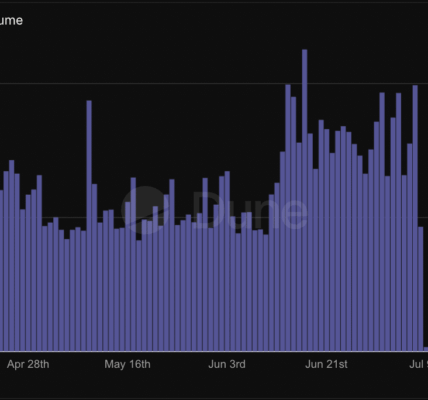
Between Thursday and Friday, June 1, 2026, the Sui Crypto Network stopped processing transactions not once, not twice, but three times in under 48 hours, the result of a software bug introduced in a recent protocol upgrade.
SUI fell roughly -8% intraday during the disruption, sliding from around $0.99 to $0.87, as traders reacted to what looked, on the surface, like a network in serious trouble.
Here is the central tension this article unpacks: three halts in two days sounds catastrophic, but does it mean your SUI is at risk, and what does it say about a blockchain that bills itself as one of the fastest Layer 1 networks in crypto?
Sui Upgrade Bug: What Actually Caused the Sui Network Halts
Think of a blockchain’s validators like a panel of judges who must all agree on every decision before the next case proceeds. If one judge gets handed paperwork that doesn’t make sense, numbers that don’t add up – the whole courtroom freezes rather than risk making a wrong ruling.
That’s essentially what happened here, and it happened three separate times.
The SUI outage chain began with protocol version v1.72, which introduced two new features: an “address balances” accounting model and gasless stablecoin transfer pathways designed to reduce friction for everyday users. The problem was a logic bug buried in how these new payment routes interacted with Sui’s gas-charging system.
In certain transactions, the network would cancel a payment for insufficient funds, but still mark those funds as spent, creating a negative balance that validators couldn’t reconcile. The network halted rather than record something contradictory, per the Sui Foundation’s postmortem.
Following last week’s outages related to the 1.72 release, the Sui Core Team has completed an investigation and incident review, detailing what happened and the steps taken by validators to restart the network.
— Sui (@SuiNetwork) May 31, 2026
The first Mainnet halt ran from approximately 7:00 a.m. to 1:30 p.m. PT on Thursday. Developers deployed an emergency patch to restore the chain – but explicitly acknowledged it carried a known probability of causing another halt.
That’s a significant admission: they knowingly shipped a fix that might break things again, choosing speed over certainty to get the network back online. Sure enough, a variant of the same gas-fee bug triggered a second blockchain downtime event on Friday morning.
The third outage had a distinct cause entirely. When validators rebooted to apply the Friday fix, a randomness mechanism used by certain on-chain applications failed to properly record its deactivation status. The protocol deadlocked, unable to close the current epoch, and the chain froze again from roughly 1:30 p.m. to 7:20 p.m. PT Friday. Three separate failure points, all triggered by a single Sui upgrade bug in v1.72.
Is Your SUI Crypto Safe? What Holders Need to Know Right Now
The answer depends on where your SUI was sitting and what you were doing with it during the outages.
The critical distinction is between a liveness failure and a safety failure. This was a liveness failure. The network stopped moving forward. It did not alter, erase, or expose any existing balances or private keys.
Sui Foundation explains causes of three consecutive mainnet halts
Sui Foundation said three mainnet halts on Thursday and Friday were caused by two separate bugs introduced in the v1.72 upgrade. The first two halts were tied to a gas-charging bug exposed by the “address… pic.twitter.com/7wfhVbUKge
— Wu Blockchain (@WuBlockchain) June 1, 2026
If your SUI was on an exchange, your funds were not at risk. Exchanges typically suspend deposits and withdrawals during network disruptions, which is standard practice. You could not move your SUI during the outage windows but your balance remained intact.
If your SUI was in a self-custody wallet, your assets were safe throughout. A network halt does not touch the ledger state. Your tokens existed on-chain exactly as they did before the freeze. No one can access your funds without your private keys and the halt had no bearing on key security.
If you had a pending transaction or an open DeFi position during the halt, this is where real frustration occurred. Leveraged positions could not be managed. Time-sensitive trades could not be executed. Transactions submitted during the outage windows were either delayed or failed outright.
You did not lose funds to the bug itself, but market moves during downtime were entirely outside anyone’s control. That is a genuine and legitimate risk for active DeFi users on Sui.
DISCOVER: The Next 1000x Crypto Gem Before It Lists on Binance
The post Sui Crypto Network Crashed 3 Times in 48 Hours After a Single Upgrade Bug: Is SUI Actually Safe? appeared first on 99Bitcoins.