Key Takeaways
- Franklin plans to use $2.6B BENJI assets inside ETFs and mutual funds after SEC clearance.
- Franklin’s $872B fund base could push tokenization deeper into mainstream portfolio management.
- BENJI use could start in Q4, pending fund-board approvals across Franklin’s 130+ ETFs.
Franklin Wins SEC Clearance to Put BENJI Inside Traditional Funds
Franklin Templeton is preparing to place tokenized assets inside traditional investment funds, pushing blockchain deeper into the plumbing of mainstream asset management.
The firm plans to use its Franklin Onchain U.S. Government Money Fund, known as BENJI, as a holding or collateral inside exchange-traded funds (ETFs) and mutual funds, according to a Bloomberg report. The strategy could begin as early as the fourth quarter, subject to approval from individual fund boards.
The Securities and Exchange Commission cleared the structure through a no-action position, allowing Franklin funds to use the tokenized money-market product for cash management and collateral purposes.
“This is the first time the SEC has said a digitally native product can be used in traditional financial products,” said Sandy Kaul, Franklin’s head of digital assets and innovation.
Tokenization Moves Into Fund Management
The shift goes beyond issuing blockchain versions of existing securities.
Franklin has already distributed tokenized funds through digital wallets. Now it wants to use those assets inside conventional portfolios to improve liquidity management and make idle cash more productive.
A fund could begin holding BENJI tokens once the product is onboarded, although board approval would still be required.
The potential reach is substantial. Franklin oversees more than 130 ETFs globally with about $82 billion in assets, while its mutual funds hold roughly $790 billion. Its tokenized money-market funds manage about $2.6 billion.
Wall Street Tokenization Push Broadens
The move comes as tokenized real-world assets gain traction across traditional finance.
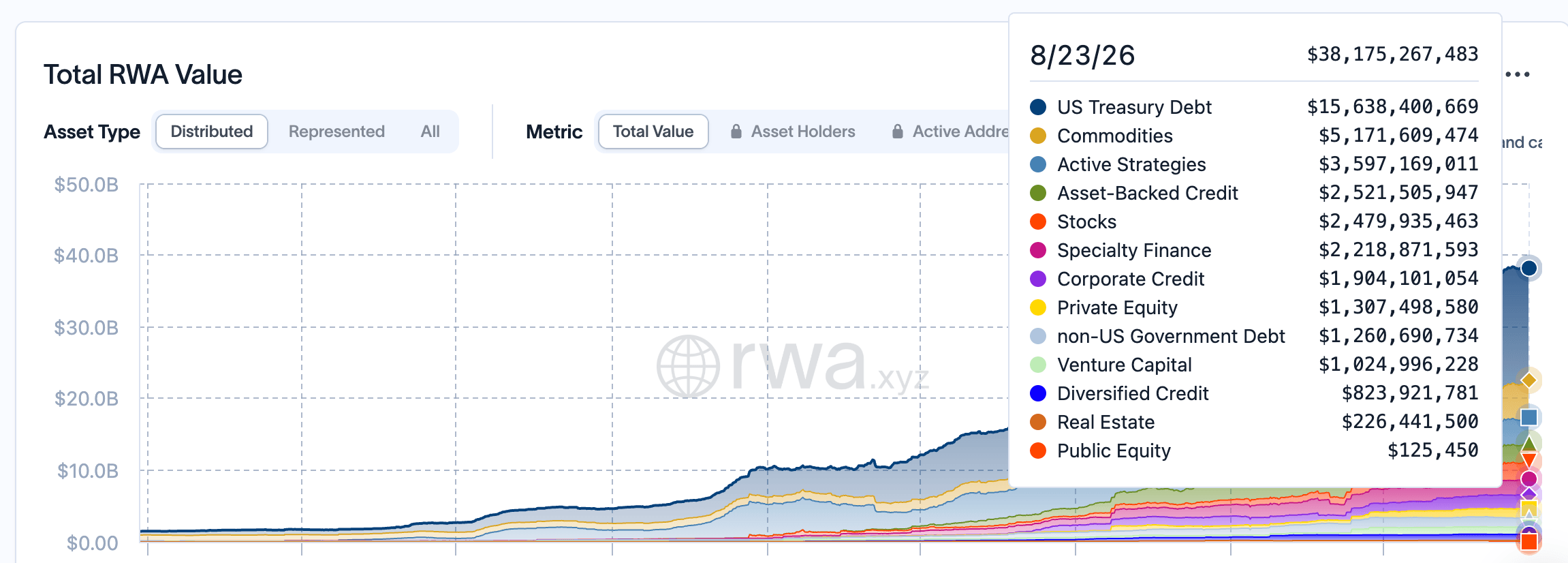
The market value of tokenized assets has climbed to over $38 billion, according to RWA.xyz. Firms including Blackrock and BNY have also expanded blockchain-based fund and settlement initiatives.
The attraction is straightforward: tokenized assets can support faster settlement, round-the-clock transfers and more efficient collateral use.
Franklin’s approach adds another layer. Instead of asking investors to seek out tokenized products, the firm could quietly use them inside traditional funds as part of routine portfolio management.
Franklin also plans to issue additional tokenized products that could eventually serve as cash or collateral across more of its fund lineup. That marks an important evolution in tokenization. The technology is moving from the wrapper around an investment to the machinery inside it.