Key Takeaways
- Zakura proposed one-time viewing keys for every zcash swap routed through Near Intents.
- The design limits future quantum exposure to one swap without changing users’ spending keys.
- With $19M+ routed into ZEC, privacy hardening is becoming a practical infrastructure priority.
Zakura Proposes One-Key-Per-Swap Privacy for Zcash
Quantum computers are not cracking Zcash today. Yet, Zcash developer Zakura is already designing around the possibility that one eventually could.
The Zcash infrastructure team has proposed a one-time incoming viewing key for every ZEC swap through Near Intents, addressing a subtle privacy risk created when shielded Zcash addresses are posted permanently on Near’s public blockchain.
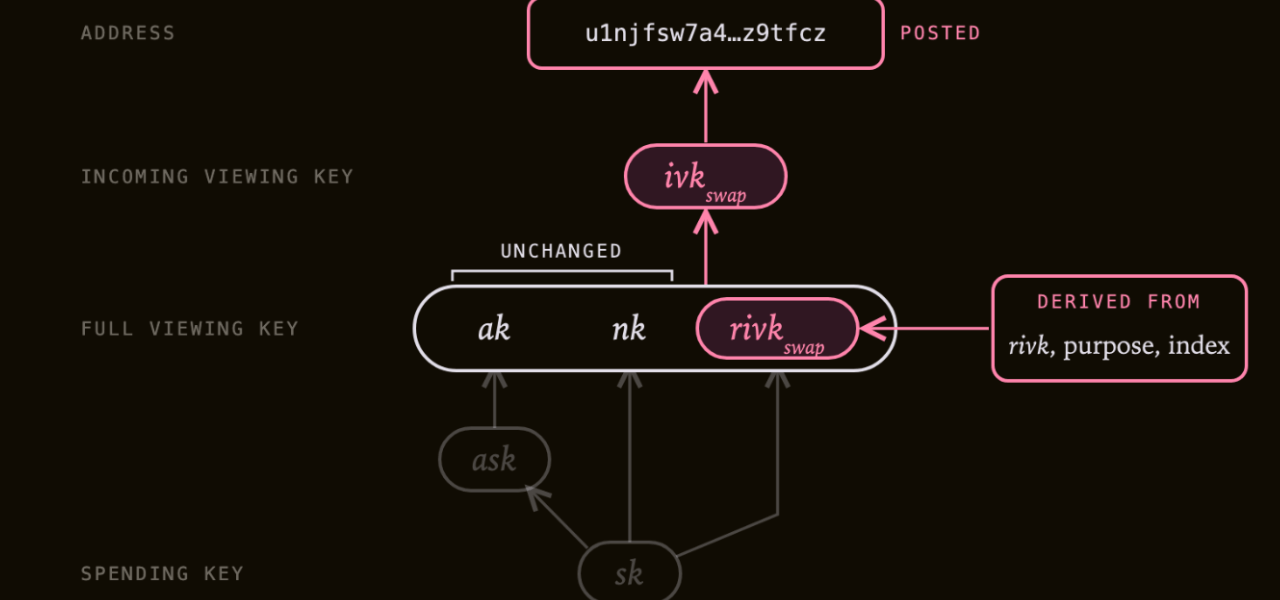
Today, multiple diversified Zcash addresses can share the same underlying incoming viewing key. A sufficiently powerful quantum computer using Shor’s algorithm could theoretically recover that key from a publicly exposed address and use it to link payments received across the account.
Zakura’s proposal limits the blast radius.
One Swap, One Viewing Key
Under the design, every cross-chain swap receives a separate incoming viewing key and refund address.
If quantum technology eventually breaks one publicly posted address, then an attacker would learn about payments associated with that swap alone, rather than gaining visibility into the account’s broader payment history.
Crucially, the user’s spending key does not change. Funds received through the one-time address remain spendable from the same account, avoiding the cumbersome alternative of creating separate Zcash accounts for every transaction.
That distinction is important for both software and hardware wallets, where splitting funds across numerous accounts could create serious usability problems.
Private Lookups Solve the Recovery Problem
Creating a new viewing key for every swap introduces another challenge: wallet recovery.
A restored wallet would otherwise have to scan Zcash history repeatedly using every swap key it had ever generated.
Zakura proposes solving this with private information retrieval (PIR). Public filters help determine whether a refund address received funds, while encrypted queries allow the wallet to locate the relevant transaction without the server learning which address is being checked.
Compatible software wallets using Zakura’s open-source libraries could integrate the feature within weeks, with hardware-wallet support expected later.
Near Intents Usage Makes the Risk Worth Solving
This is not merely theoretical infrastructure with no users.
In September, Aurora Intents processed more than $19 million across 1,718 swaps for a zcash-denominated zkSNARKs auction, demonstrating meaningful demand for cross-chain routes into ZEC.
That makes permanently published addresses a privacy issue worth addressing before quantum machines become capable of exploiting them.
Zcash developers are separately preparing the broader NU7 network upgrade, though the currently proposed NU7 changes are not themselves a comprehensive post-quantum migration.
The bigger signal is cultural: crypto security teams are increasingly treating quantum risk as something to engineer around now, not after the first practical attack appears.