Key Takeaways
- The BIS argues bitcoin cannot function as everyday money because it lacks the credit structures and public backstops underpinning fiat money.
- Michael Saylor agrees that, for now, bitcoin is better suited as capital than currency, advocating credit products built on top of BTC.
- Both see credit as essential, but disagree on whether public institutions or private financial structures should support it.
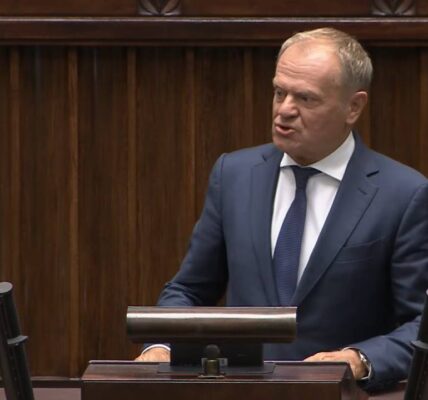
In “Money and the Architecture of Trust,” published this month, Iñaki Aldasoro, an economist at the BIS, uses a meme featuring a dog that wants “only money,” not IOUs, to describe the mindset behind gold and bitcoin.
The meme refers to Luca Pacioli, the Italian mathematician who is credited with the first published systematic treatment of double-entry bookkeeping in the 15th century.

“The dog wants an asset that is no one’s liability because it does not trust. It wants gold. It wants bitcoin. But it cannot have money without trust, because money without trust is a contradiction in terms,” Aldasoro wrote.
The Capital Idea
He argues that money is a means of settlement that extinguishes an obligation when settlement is due, while credit is a promise to pay money.
The economist calls gold “not a monetary alternative, but a monetary protest,” and says bitcoin “shares this impulse and adds a technological veneer.”
The paper’s author also criticizes Bitcoin’s fixed supply as “unresponsive to any conceivable state of the world,” a claim that continues to be rebutted by Bitcoin advocates. He also points to the two failed attempts to introduce BTC as legal tender in El Salvador and the Central African Republic.
Meanwhile, bitcoin evangelist and Strategy co-founder Michael Saylor has argued for years that BTC is not a currency but capital—and his firm has stacked roughly $71 billion worth of the asset with that conviction in mind.
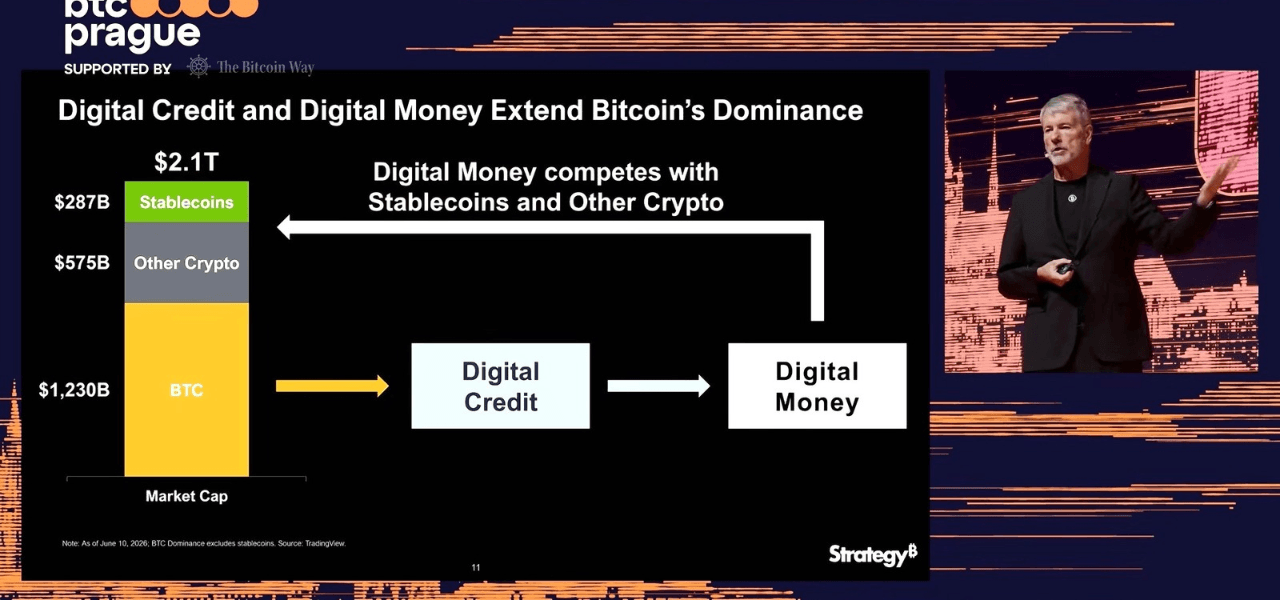
“Digital Capital is the foundation for Digital Equity and Digital Credit,” he said recently. In June, Saylor argued for “digital money”: a dollar-pegged, yield-paying product built from what he calls bitcoin-backed credit plus fiat cash equivalents, which could work as a medium of exchange. In short, you’d pay with digital money, not BTC.
“This is not a rejection of Bitcoin. It is a bridge from the fiat world to the Bitcoin world,” Saylor wrote in June. Strategy already sells such credit products, including the yield-paying preferred stock STRC. It is not collateralized by Strategy’s bitcoin, though, and its dividends come from the company.
Bitcoin ‘Credit Superstructure’
Both Aldasoro and Saylor appear to describe the same structure: a scarce asset that is nobody’s liability at the bottom, with credit on top. Writing about gold, Aldasoro says that in such a system, “the settling is done in a credit superstructure, with the metal anchoring rather than circulating.” He applies this only to gold, while Saylor applies it to bitcoin.
“Gold became more useful when banks, capital markets, credit instruments, and settlement systems developed around it,” Strategy’s executive chairman said in July.
Both also agree that the dollar, or fiat money in general, remains the measuring stick—the unit of account. However, Saylor adds that bitcoin is “not yet the unit of account for most of the world.”
Additionally, Aldasoro and Saylor warn about the “inherent instability of credit,” as people tend to create more claims to, for example, BTC or gold than there is actual BTC or gold.
In either case, this BTC “credit superstructure” is increasingly taking shape. As Bitcoin.com News reported, TD Cowen analyst Lance Vitanza recently wrote that the conversation is “moving beyond bitcoin ownership and toward the ecosystem being built around it.”
Double Standards for Bitcoin vs. the U.S. Dollar
Saylor’s “capital, not currency” narrative has drawn criticism from bitcoiners who argue that BTC is everyday money. The BIS paper, however, appears to apply a double standard to bitcoin and fiat money.
For example, Aldasoro writes that bitcoin’s “value rests entirely on the expectation that others will value it.” Yet, by his own definition, all money is “sustained by a shared expectation” that it will be accepted tomorrow. For fiat money, Aldasoro argues, this expectation is “grounded in institutions,” such as the central bank and the government.
Aldasoro also maintains that trust at scale needs public backstops. However, the paper itself argues that money starts in the private sector and receives official recognition last, which weakens the argument that bitcoin’s failed legal tender experiments prove it cannot function as money.
Citing the Bitcoin white paper, Aldasoro also concludes that “money without trust is a contradiction,” but immediately concedes that bitcoin’s design removes “trust in an issuer rather than trust itself,” as the white paper also states: “…without the need for a trusted third party.”
In either case, bitcoin is still used and viewed far more as an asset than as a means of payment, although its use as money is growing. The credit layer built on crypto has failed before: Lenders Celsius and BlockFi and the exchange FTX collapsed in 2022, with no backstop behind them.
Speaking at BTC Prague this year about failed bitcoin companies in general, Saylor said some “probably had poor financial practices” and “maybe they were overleveraged.”
The Opposite Reasons
The BIS economist and Strategy’s co-founder thus agree that bitcoin isn’t working as everyday money, but for opposite reasons.
Saylor argues that bitcoin shouldn’t be everyday money because it is too valuable to spend. Aldasoro, meanwhile, argues that BTC cannot serve this purpose because it is deficient: It is nobody’s IOU, its supply cannot change, and there is no lender of last resort behind it.
The BIS author also argues that credit is how money actually works. Saylor, meanwhile, seeks to repackage bitcoin for investors looking for a less volatile asset.
They also differ on what protects the system in a crisis. In the BIS paper, public backstops do: The central bank supplies money when no one else will, while deposit insurance and government backing spread the risk. In Strategy’s stack, Saylor says shareholders are the “junior tranche” that “absorbs volatility,” with nothing public standing behind them.
“Bitcoin aspires to be money without the architecture that makes money work,” Aldasoro wrote.
“A 40% volatility asset is perfect for some investors and unsuitable for others. The answer is not to change Bitcoin. The answer is to build products above Bitcoin that match the needs of each pool of capital,” Saylor argued in June. In October, he pitched a BTC-backed stablecoin that would pay up to 8% yield.
What Will Bitcoin Be the Day After Tomorrow?
Meanwhile, Bitcoin’s technology, related solutions, and adoption continue to evolve, even as both sides argue from their own ivory towers.
“The world does not need everyone to price coffee in sats tomorrow,” Saylor said in June, leaving the question of what comes next open.