Key Takeaways
- Gold climbed 5% this week to $4,620, its highest price since May.
- The dollar index dropped to 98.723 on Aug. 19 after Treasury doubled its bond buyback program.
- Bitcoin, up near $78,000, is riding the same debasement trade, but analysts say gold differs.
Gold’s Breakout Above $4,600
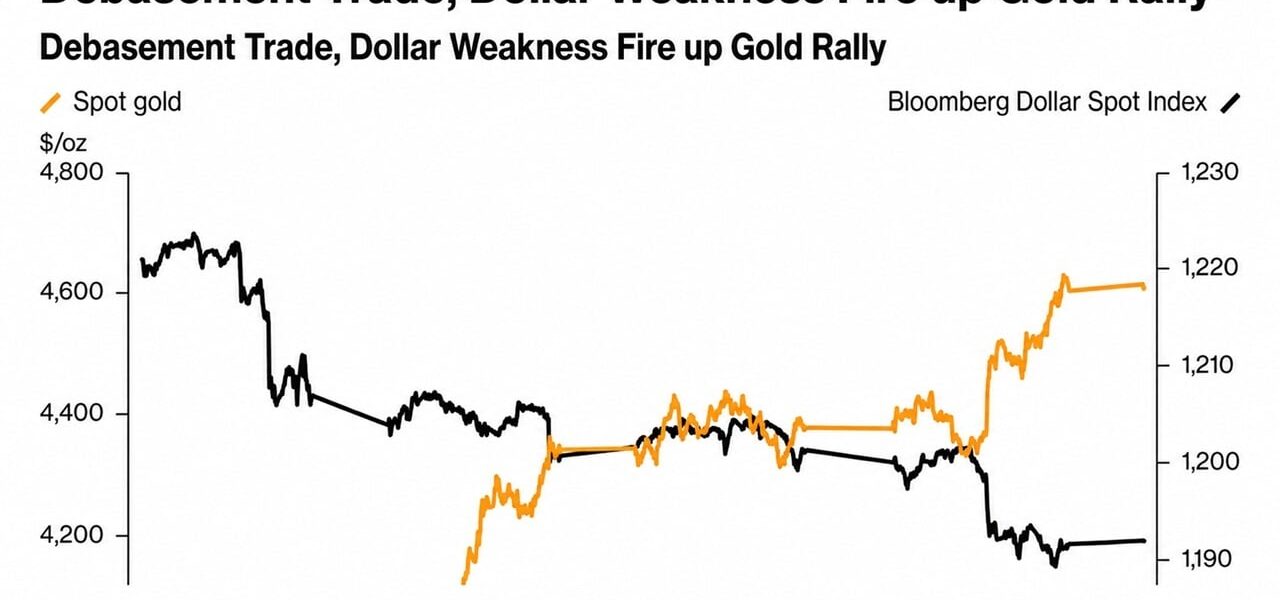
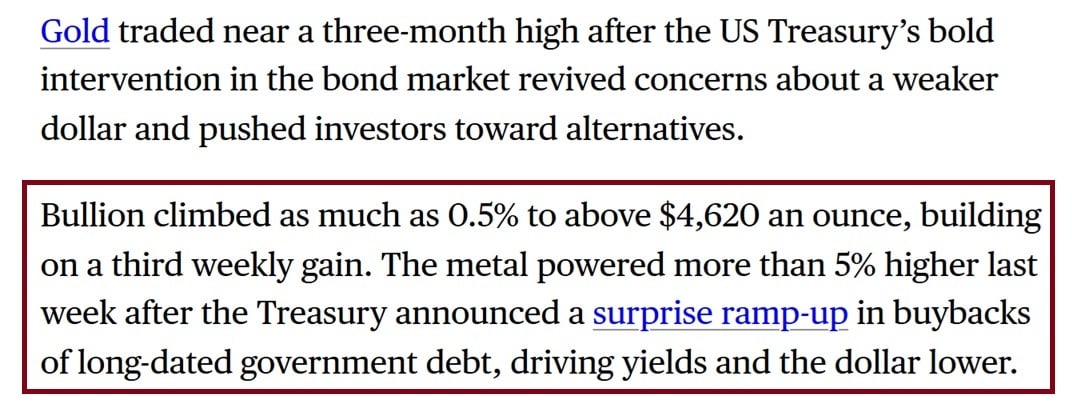
Bloomberg analysts noted that gold climbed to a three-month high above $4,620 an ounce as Treasury intervention in the bond market revived fears of a weaker dollar. Spot gold traded between $4,580 and $4,600 through the week, with futures pushing toward $4,650.
Saxo Bank commodity strategist Ole Hansen said gold was “continuing its strong run higher, gaining 1.8% on the day and 5.1% on the week,” calling the move above its 200-day moving average the technical trigger for fresh momentum buying, and flagging a move topping $4,770 as the next resistance level.
Some traders see a breakout above that level as confirmation the rally has further room to run, with talk of $5,000 an ounce if the dollar keeps sliding. The move is bigger than most forecasters expected, and the World Gold Council’s mid-year outlook, published in June, had treated a run to $4,500 as an upside scenario requiring “a strong, clear signal” from policymakers.
The Treasury’s buyback decision appears to be that signal as gold is now trading well above the level the Council flagged as its bullish case for 2026.
Treasury’s Buyback Bet Behind the Move
The catalyst traces back to Aug. 19, when the U.S. Treasury said it would double its long-term bond buyback operations, running from Sept. 9 through Nov. 4. The announcement came days after the 30-year Treasury yield spiked to a 19-year high of 5.337%, a selloff that rattled bond markets and pushed officials to act.
The buyback plan pulled yields back to 5.198%, but it hit the dollar instead, with the dollar index sinking to 98.723, its lowest level since May 14. Analysts including ING global markets head Chris Turner and Capital Economics economist Ariane Curtis pointed to the buyback expansion as the trigger, noting the move effectively shifts more government borrowing toward short-term bills (a trade-off markets read as dollar-negative even as it steadies longer-dated debt).
Buybacks let the Treasury retire older, less-liquid bonds by purchasing them back with proceeds from new debt sales, a tool it has leaned on repeatedly this year to keep long-term borrowing costs from spiraling after the yield spike rattled auctions.
Robert Kiyosaki, the “Rich Dad Poor Dad” author, went further, calling the expanded buybacks a form of quantitative easing and urging followers toward bitcoin, gold, silver and select real estate. The comparison isn’t exact given that the Treasury funds its buybacks from debt-sale proceeds rather than injecting new central-bank money, unlike true quantitative easing. That said, the market’s reaction to the dollar this week has looked much the same either way.
Bitcoin Rides the Same Debasement Trade
As Bitcoin.com News reported when the Treasury’s buyback expansion first hit markets, bitcoin jumped roughly 20% in the days after the announcement, extending a rebound that has become tightly linked to the same dollar-weakness narrative driving gold. Economist Mohamed El-Erian noted bitcoin’s $79,000 push alongside gold’s climb past $4,600 as standout performers of the same trade, but not everyone seems to be convinced bitcoin belongs in that basket.
Robin Brooks, the former Goldman Sachs chief FX strategist who first popularized the debasement-trade thesis, has said he would “stay well clear of bitcoin,” arguing markets don’t see it in the same light as gold and silver.